

SPF30 vs SPF50: Which Sunscreen Should You Sell?
For beauty distributors, the SPF question is not just technical. It affects shelf positioning, customer education, repeat purchase, and how easily a sales team can explain the product.
Quick answer: SPF30 sunscreen is a strong daily choice. SPF50 sunscreen is usually easier to sell in hot climates, outdoor markets, and routines focused on dark spots or photoaging. For distributors, the best sunscreen is the one customers will apply enough of and buy again.

If you sell skincare, sunscreen looks simple until buyers start asking practical questions. SPF30 or SPF50? Daily use or outdoor use? Lightweight texture or stronger protection?
This guide is written for beauty distributors, wholesalers, and skincare retailers who need to choose a sunscreen line that makes sense on the shelf and in real customer routines. At Neutriherbs, sunscreen is part of our broader daily skincare routine, especially for customers who also buy brightening, antioxidant, or anti-aging products.
What is the real difference between SPF30 and SPF50?
SPF stands for Sun Protection Factor. It mainly measures protection against UVB rays, the rays most linked with sunburn.
When applied correctly, SPF30 blocks about 97% of UVB rays. SPF50 blocks about 98%.
That sounds like a tiny difference. In controlled conditions, it is. In the real world, customers often apply too little sunscreen, forget to reapply, sweat, swim, or spend longer outdoors than they planned. That is where SPF50 can be easier to position.
| Customer situation | Better fit | How to position it |
|---|---|---|
| Daily city use | SPF30 or SPF50 | Morning skincare routine |
| Office workers who want a light texture | SPF30 | Comfortable daily sunscreen |
| Outdoor work, sports, beach, travel | SPF50 | Higher-protection sunscreen |
| Hot or tropical climates | SPF50 | Sun care for high-UV markets |
| Dark spots, melasma, post-acne marks | SPF50 | Support for even-tone skincare routines |
| First-time sunscreen users | Texture matters most | Easy-to-use daily protection |
Why SPF number alone is a weak selling point
Many customers think SPF50 is twice as strong as SPF30. It is not. They may also think SPF50 lasts all day. It does not.
That gives your sales team a clean explanation: SPF50 gives slightly higher UVB protection, but correct use still matters.
For distributors, the more useful question is this: will customers like the formula enough to apply the right amount? If the product feels sticky, greasy, heavy, or leaves a strong white cast, customers use less. Then the real protection drops.
When SPF30 makes sense for distributors
SPF30 can work very well when your market needs an easy daily sunscreen. Think of customers who want something under makeup, something for commuting, or something they can add to a basic morning routine without changing their habits.
SPF30 can also fit entry-level skincare sets. If you sell cleanser, toner, vitamin C serum, moisturizer, and sunscreen as a daily routine, SPF30 may feel approachable and easier to introduce in price-sensitive markets.
- Choose SPF30 when the product has a very comfortable daily texture.
- Choose SPF30 when your market is more urban than outdoor.
- Choose SPF30 when customers are still learning daily sunscreen habits.
- Choose SPF30 when you want sunscreen to sit inside a beginner skincare routine.
SPF30 should still be broad spectrum. Customers need UVA and UVB protection, especially if they buy sunscreen for brightening, anti-aging, or dark spot care.
When SPF50 is the stronger commercial choice
SPF50 is often easier to sell because customers understand "higher protection" quickly. The number feels reassuring, especially in markets with strong sunlight or strong demand for brightening products.
SPF50 is a strong fit for hot climates, beach markets, outdoor lifestyles, and customers worried about tanning, uneven tone, dark spots, or photoaging.
If your retailers already sell vitamin C, niacinamide, retinol, exfoliating products, or dark spot serums, sunscreen is not an extra product. It helps complete the routine.

- Choose SPF50 when your market has intense sun or hot weather.
- Choose SPF50 when customers ask about dark spots or uneven tone.
- Choose SPF50 when retailers want a stronger protection story.
- Choose SPF50 when the product is for outdoor, travel, sports, or beach use.
Neutriherbs sunscreen options for retailers
For retailers who want a simple sunscreen offer, Neutriherbs keeps the range easy to explain: one daily SPF30 lotion, one Vitamin C SPF50 lotion, and one ultra-light SPF50 gel for customers who dislike heavy sunscreen textures.
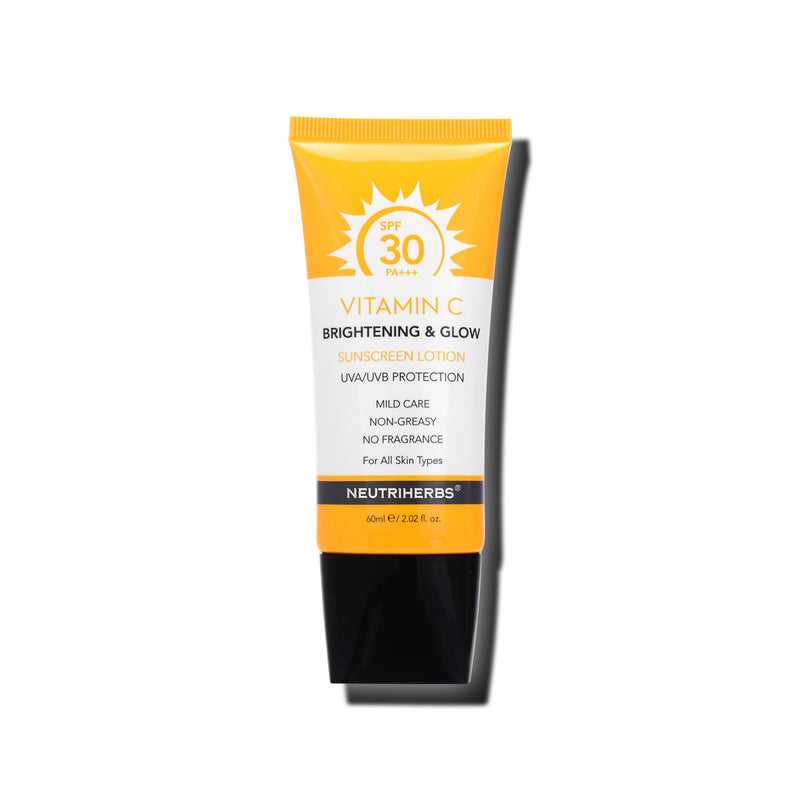
Vitamin C Sunscreen Lotion SPF30
A daily-use SPF30 option for customers who want a non-greasy sunscreen that fits into a morning skincare routine.
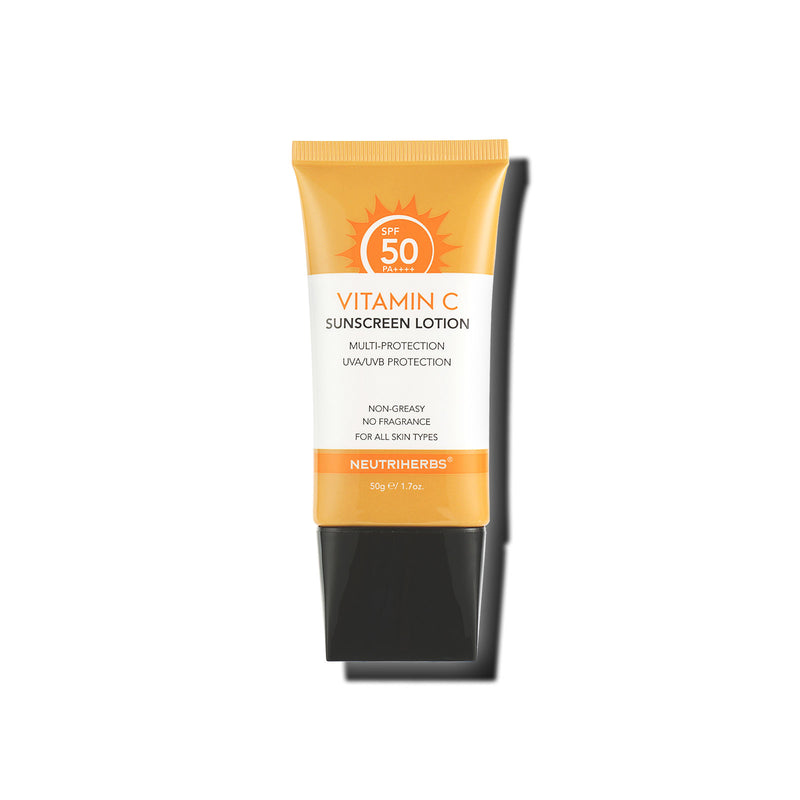
Vitamin C Sunscreen SPF50
A stronger SPF50 choice for sunny markets, outdoor routines, and customers who care about uneven tone and photoaging.
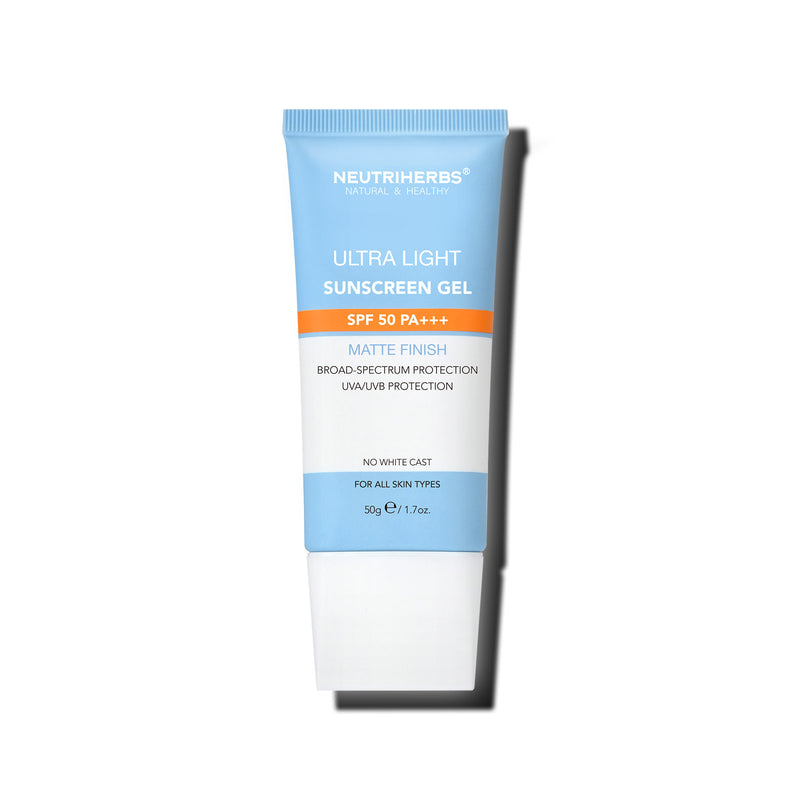
Ultra-light Sunscreen Gel SPF 50 PA+++
A lightweight gel texture for customers who want a matte, fresh finish and less white cast concern.
For wholesale and distributor inquiries, visit the Neutriherbs Wholesale Program. For private label sunscreen development, Amarrie also offers private label sunscreen solutions.
What buyers should check before choosing a sunscreen line
When a distributor tests a sunscreen, the first check should be simple: how does the formula feel after five minutes?
Not right when it comes out of the tube. Five minutes later. That is when customers notice shine, stickiness, pilling, eye sting, or white cast.
| What to check | Why it matters |
|---|---|
| Broad-spectrum claim | Customers need UVA and UVB protection |
| SPF level | SPF30 for daily use, SPF50 for stronger positioning |
| Texture after 5 minutes | Decides daily use and repurchase |
| White cast | Important for deeper skin tones |
| Finish | Matte, natural, dewy, or moisturizing should match your market |
| Makeup compatibility | Important for beauty retail |
| Sweat and water resistance | Useful for outdoor positioning |
| Marketing materials | Retailers need simple education content to sell sunscreen |

If you sell into Africa, the Middle East, Southeast Asia, Latin America, or other sunny markets, be strict on white cast, sweat feel, and packaging durability. A sunscreen that looks good in an air-conditioned office may not feel the same in 35 C weather.
How to explain SPF30 vs SPF50 to retailers
Retailers do not need a long science lecture. They need wording they can repeat to customers.
SPF30 is good for everyday sun exposure. SPF50 is better for longer outdoor time, strong sunlight, and customers concerned about dark spots or aging. Both need enough product and reapplication.
You can also give retailers a simple product-positioning script:
- SPF30: Daily city sunscreen for morning skincare routines.
- SPF50: Higher-protection sunscreen for outdoor use, hot climates, and pigmentation-conscious customers.
How to build a sunscreen offer that retailers can sell
If I were building a distributor sunscreen lineup, I would not start with ten SKUs. Too many options slow down the buyer.
I would start with two clear choices:
| SKU | Positioning |
|---|---|
| SPF30 daily sunscreen | Lightweight, everyday, easy under makeup |
| SPF50 high-protection sunscreen | Outdoor, hot climate, dark spot and anti-aging support |
Then give retailers the support they need: product photos, texture videos, FAQ sheets, routine cards, and simple claims that do not sound medical. This is also where a supplier with ready-to-use marketing material can save a distributor time during launch.
The last point matters. Sunscreen is regulated differently across markets. Avoid loose claims such as "prevents all aging" or "blocks 100% UV." Keep the language practical: broad-spectrum protection, daily sun care, lightweight texture, comfortable finish, and suitable for morning routines.
FAQ: SPF30 vs SPF50
Is SPF50 twice as strong as SPF30?
No. SPF30 blocks about 97% of UVB rays when used correctly, while SPF50 blocks about 98%. SPF50 gives slightly higher protection, but the bigger issue is whether the customer applies enough and reapplies.
Can customers use SPF30 every day?
Yes. Broad-spectrum SPF30 is widely used for daily protection. It is a good fit for short outdoor exposure, commuting, and regular morning skincare routines.
Who should choose SPF50?
SPF50 is better for customers who spend more time outdoors, live in sunny climates, sweat a lot, go swimming, work outside, or worry about dark spots and photoaging.
Does darker skin need sunscreen?
Yes. Deeper skin tones may burn less easily, but UV exposure can still contribute to uneven tone, hyperpigmentation, photoaging, and long-term skin damage.
Can sunscreen be sold with vitamin C or retinol products?
Yes. Sunscreen fits naturally with brightening and anti-aging routines. Customers using vitamin C, niacinamide, retinol, or exfoliating products should understand why daily sun protection matters.
Final thoughts
SPF30 and SPF50 can both sell well. SPF30 works when the product feels easy enough for daily use. SPF50 has stronger appeal in sunny markets, outdoor lifestyles, and routines built around brightening or anti-aging.
For distributors, the better question is not "Which SPF is higher?" It is "Which product will my retailers reorder because customers actually use it?"
Keep exploring Neutriherbs:
Sources